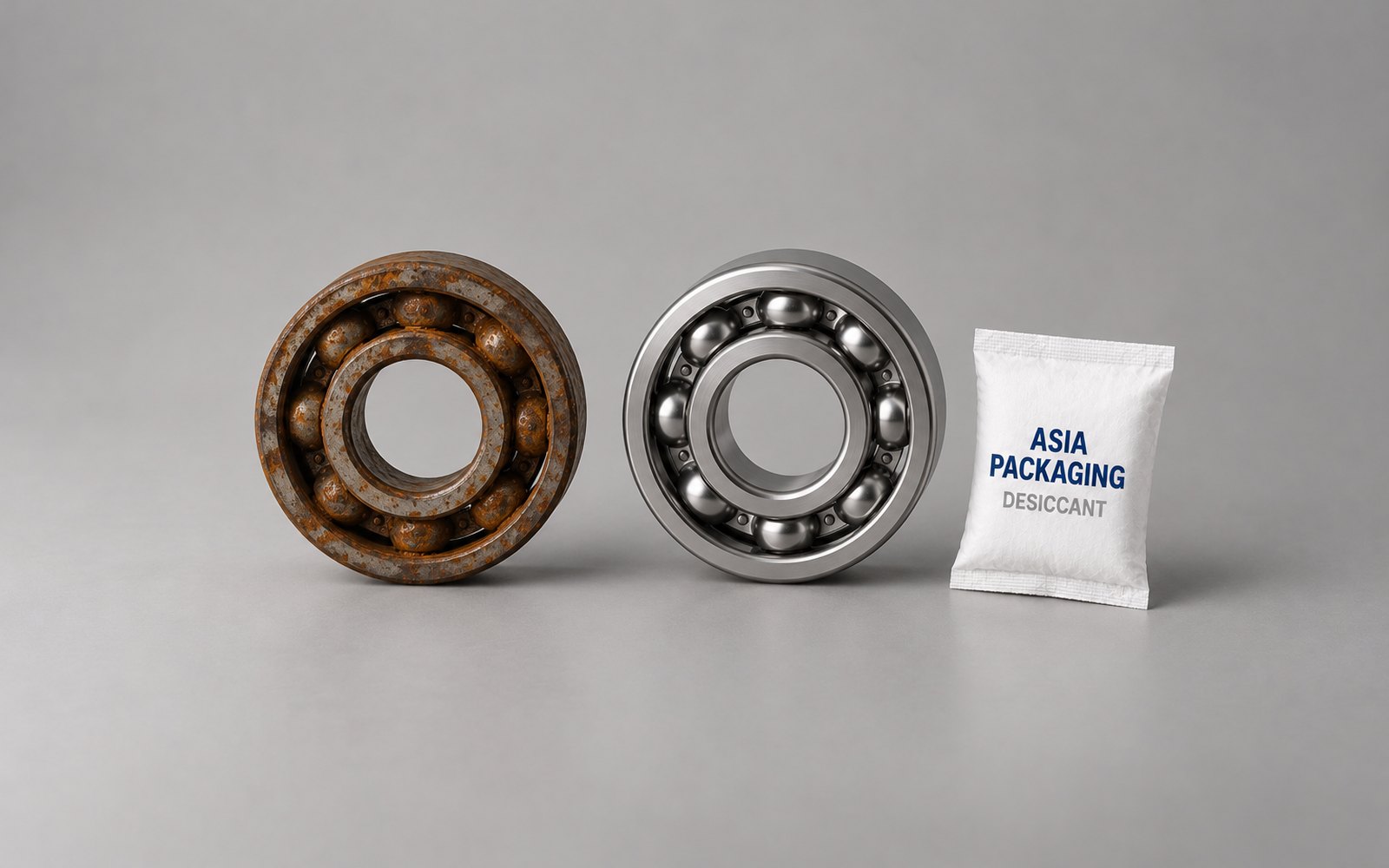
Steel corrodes above roughly 60% relative humidity and effectively stops below it. Everything else follows from that one threshold.
Corrosion prevention in packaging comes down to a single number. Steel corrodes when the relative humidity at its surface exceeds roughly 60%. Below that, the electrochemical process effectively stops.
Every decision in a corrosion-protection specification is in service of staying under that threshold for as long as the part is in the box.
Seal first, or do not bother
Desiccant in an unsealed crate is money burnt. Without a barrier, the enclosure exchanges air with the outside continuously, and the desiccant simply equilibrates with the entire atmosphere — an inexhaustible supply it cannot win against.
A barrier liner is what converts a timber crate or a corrugated case into a controllable enclosure. It is not a refinement around the desiccant; it is the thing that makes the desiccant mean anything.
This is by some distance the most common failure we see. The specification calls for desiccant, the desiccant is correct and correctly dosed, and the crate was never sealed.
Dose the air, not the crate
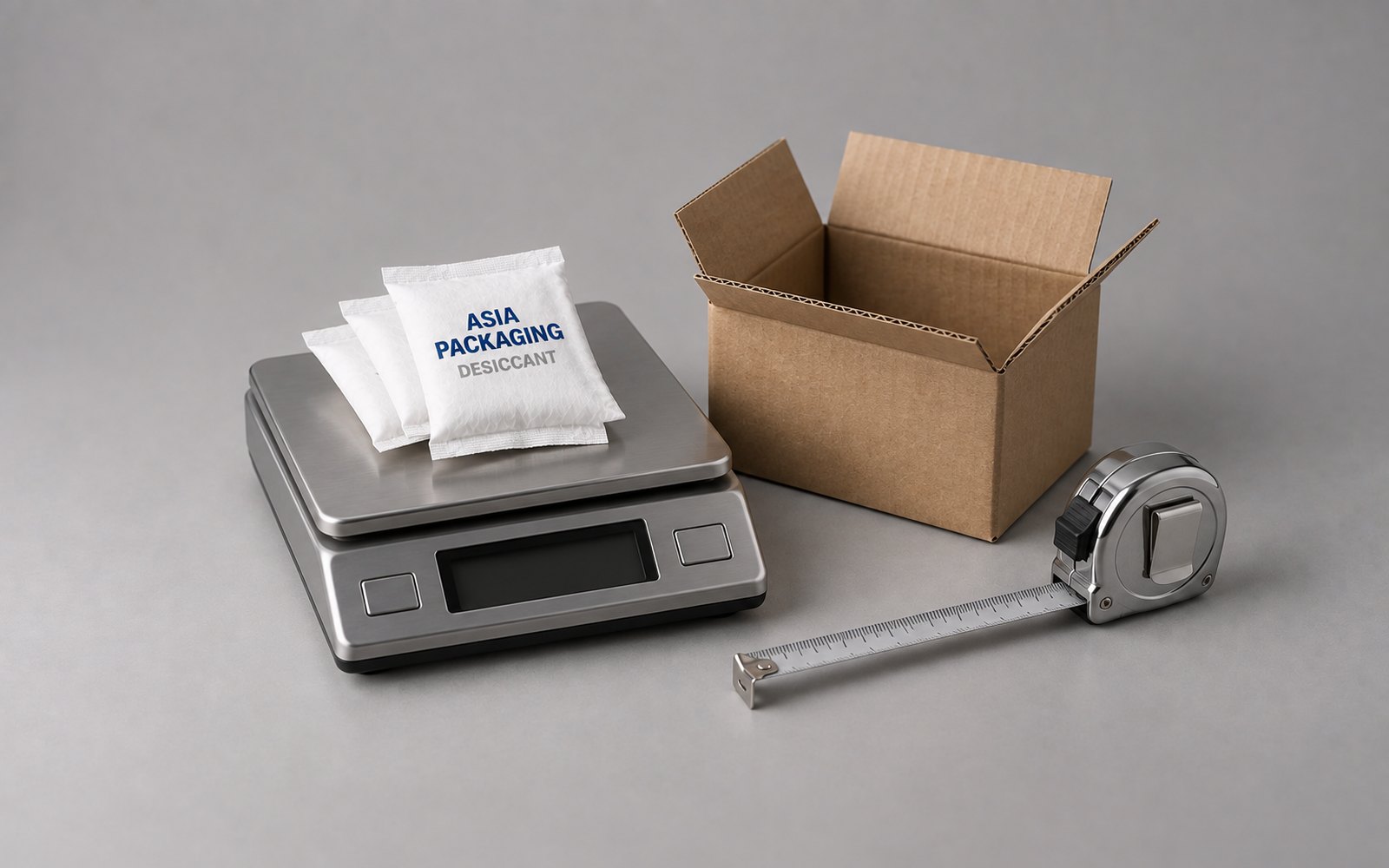
The baseline is roughly 5 grams of silica gel per cubic foot — about 170 grams per cubic metre.
The important detail is that this applies to net enclosed air volume, after the part is in place. A large casting in a crate displaces most of the volume; dosing on external crate dimensions can over-specify by a factor of several.
Increase the dose for long storage periods, permeable enclosures, and packing carried out in high humidity — sealing a crate in monsoon conditions traps that air inside it for the duration.
Hang it, do not bury it
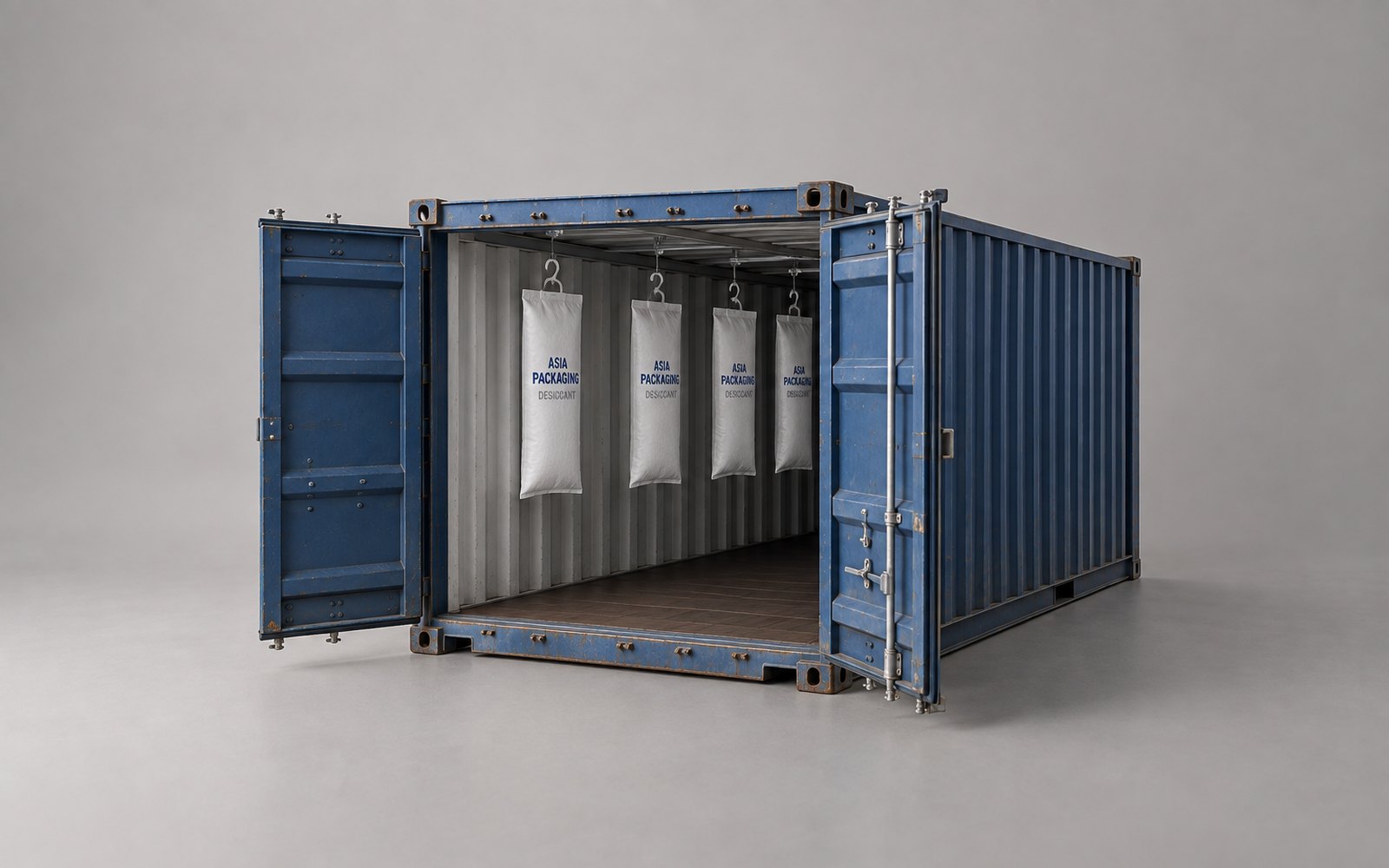
Desiccant works on the air that reaches it. A bag suspended in the air space intercepts moving humid air continuously. The same bag placed underneath the load, packed between components, sees very little of it and does proportionally less work.
This is why our silica gel bags are available with a hanging hook, and it is one of the easiest improvements to make to an existing packing procedure. Same product, same dose, considerably better result.
The container is a separate problem
For anything crossing an ocean, in-crate desiccant is only half the specification.
The container itself needs calcium chloride protection sized to the route. Without it, nightly condensation from the container roof drips onto the crates for the length of the voyage, and the sachets inside are overwhelmed by a water load they were never sized for.
Four to eight Absorpoles for a 20 ft container, toward the upper end for long humid routes.
Make the condition visible
Two cheap additions turn a specification from an assumption into a controlled process.
Indicating fill in the bag lets stores staff assess condition through the pack without unwrapping anything.
Indicator cards inside the barrier record what the humidity actually did.
Use them on the first shipment of a new specification. Whatever comes back tells you whether you are over-dosing — which is only wasting money — or under-dosing, which is waiting for an expensive failure.
The common specification errors
Reviewing customers' existing corrosion specifications, the same four problems recur:
- No seal. The desiccant cannot work and never could.
- Dosed on crate dimensions rather than net air volume.
- Desiccant buried under the load instead of suspended in the air space.
- No container-level protection on an ocean route.
None of these are expensive to fix. Most of them are free.