Most water damage claims on dry containers have nothing to do with rain, leaks or rough handling. The water was already inside the box when it was sealed.
There is a particular kind of cargo claim that confuses everyone involved. The container arrives sealed, the seal number matches, there is no evidence of a leak — and the cargo inside is stained, rusted or mouldy. No one damaged it. Nothing got in.
The water was already there.
Where the water comes from
Three sources fill a container with moisture before it ever leaves the yard. The first is the air itself: a 20 ft container sealed on a humid morning traps a volume of humid air. The second is the cargo. Textiles, leather, timber, coir, paper and agricultural commodities are hygroscopic — they hold water and release it as conditions change. The third is the packaging: corrugated board arrives at the packing line already in equilibrium with the warehouse.
None of that matters while the temperature stays constant. It matters enormously when it does not.
Container rain
A steel container crossing climate zones swings through large daily temperature cycles. During the day the roof heats and moisture evaporates from cargo and packaging into the air. Overnight the roof cools faster than anything else in the box — often below the dew point of the air inside. Water condenses on the underside of the ceiling, collects, and falls back onto the cargo.
Shippers call it container rain. Over a five-week voyage it happens every night.
Why sachets alone do not solve it
The common response is to put more silica gel in the cartons. It rarely works, and the reason is arithmetic. Silica gel adsorbs up to 40% of its own weight in water. A container holds vastly more water than a practical charge of silica gel could ever hold, so the sachets saturate early in the voyage and spend the remaining weeks doing nothing.
Worse, they saturate silently. Nobody opens the carton mid-ocean to check.
Two levels, not one
Effective export protection works at two levels, and they address different problems.
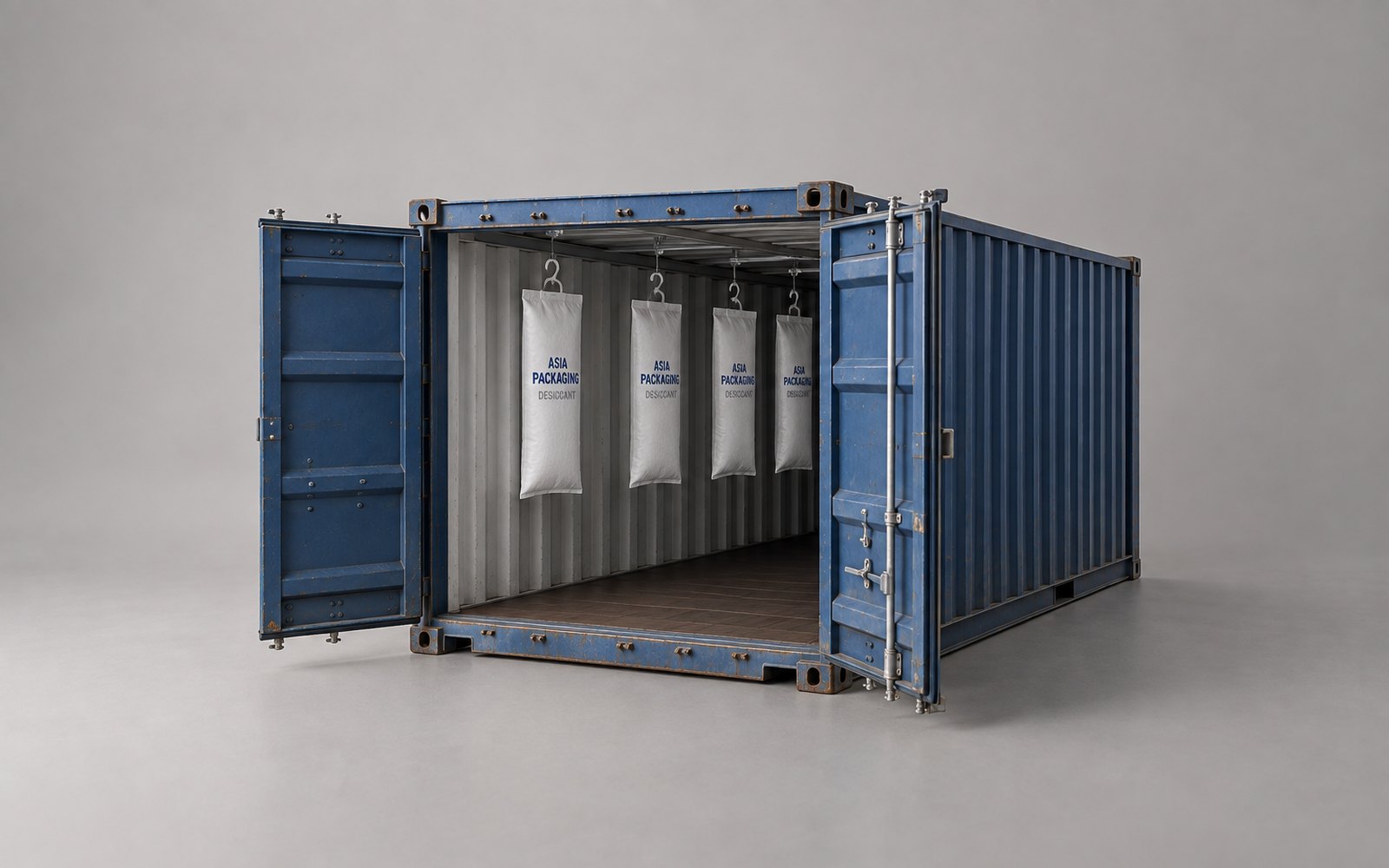
Container level. Calcium chloride systems absorb over 200% of their own weight and hold it as a brine in a sealed chamber, where it cannot run back onto the cargo. Four to eight Absorpoles protect a 20 ft container, toward the upper end for long humid routes and hygroscopic cargo. This is what stops the condensation cycle.
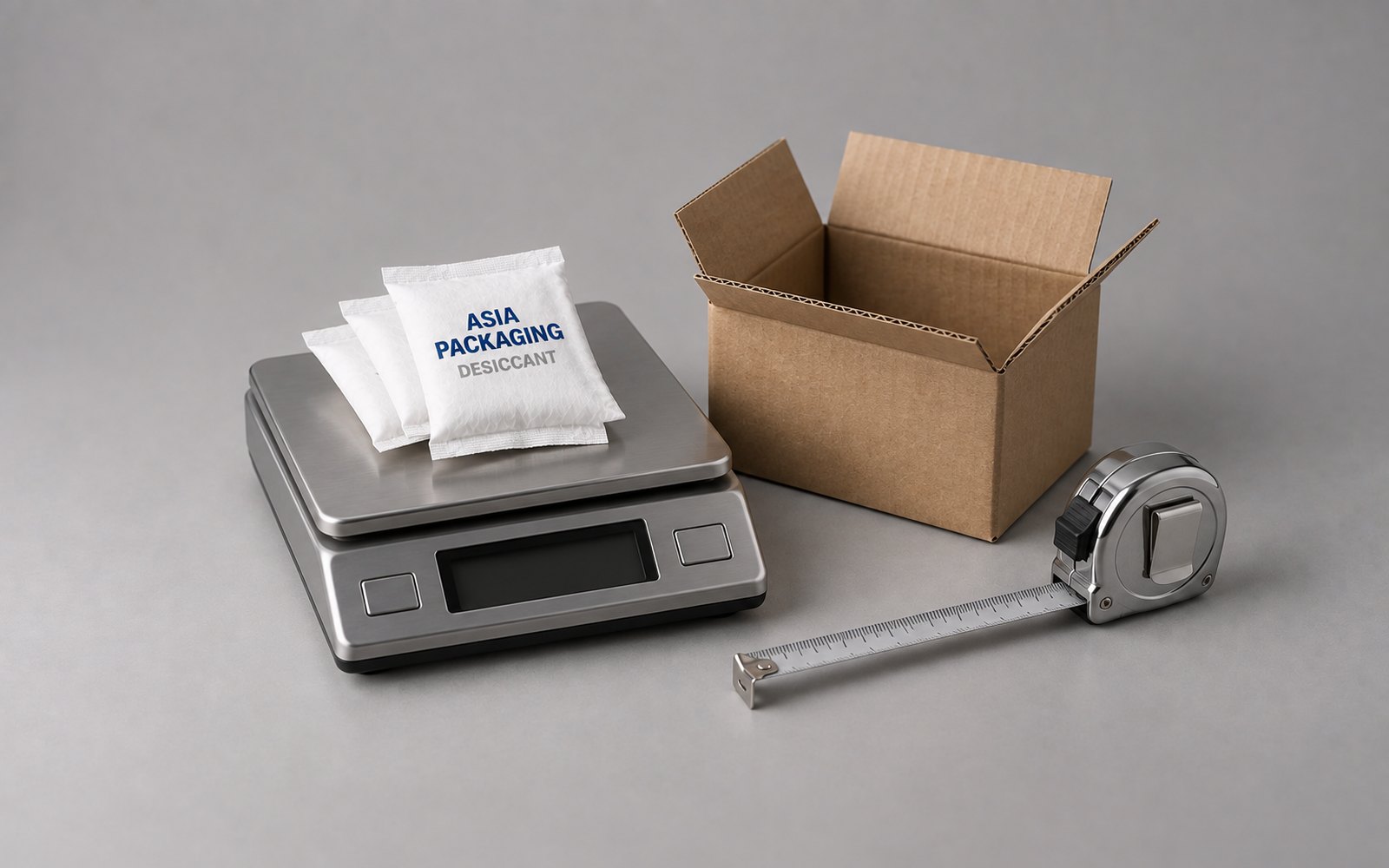
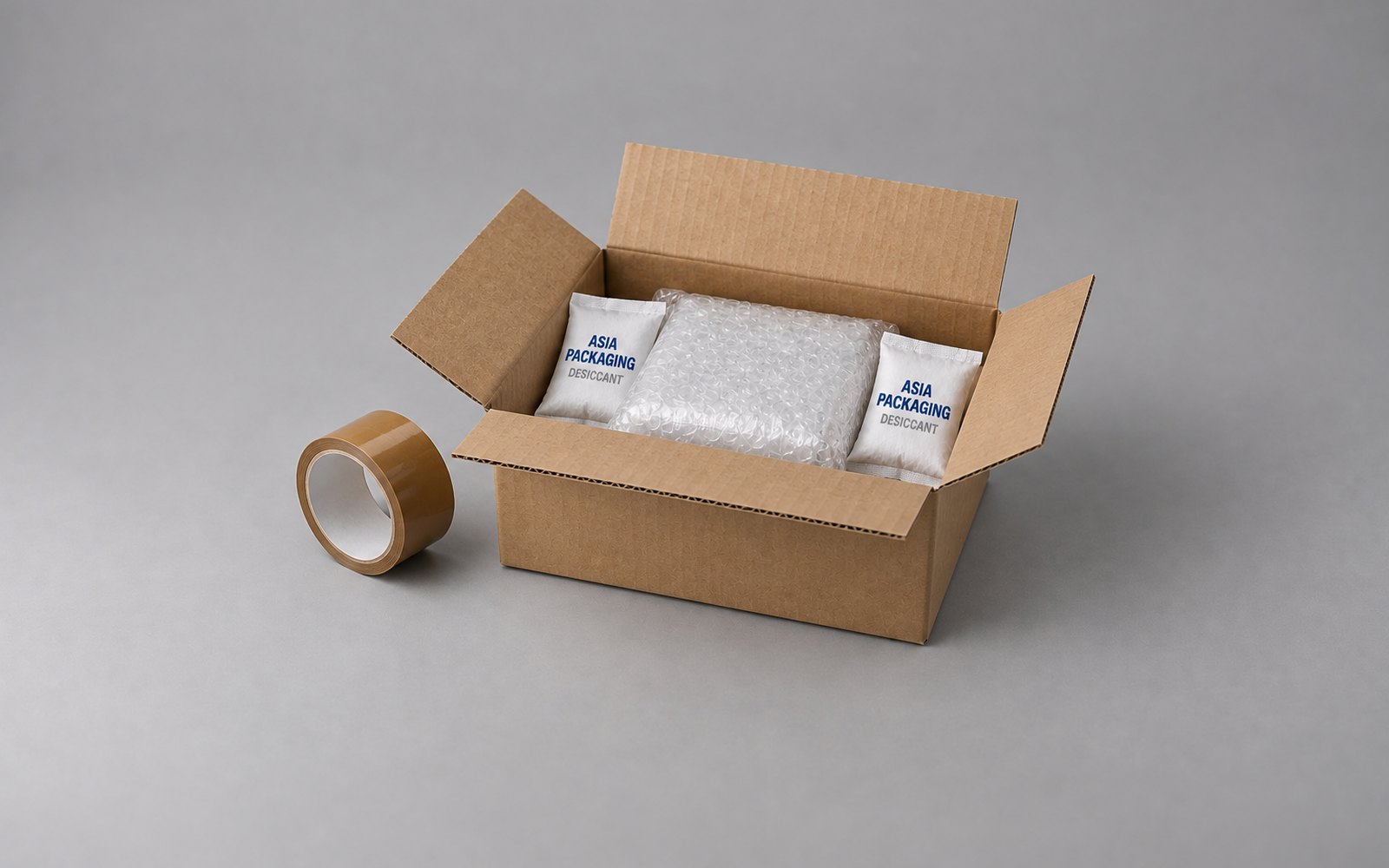
Pack level. Inside the carton, silica gel at roughly 170 grams per cubic metre of enclosed air controls the immediate environment around the product. This only works if the carton is actually sealed — a barrier liner is what turns a cardboard box into a controllable enclosure.
Neither level replaces the other. Container desiccant alone leaves individual cartons vulnerable once they are split at destination. Sachets alone get overwhelmed by the box.
Verifying rather than guessing
The cheapest improvement most shippers can make costs almost nothing: put humidity indicator cards into a sample of cartons on the next shipment. When they arrive, you learn whether your current dose is adequate, excessive or hopeless.
Most packing specifications we review have never been tested. They were set years ago, copied from a previous product, and have been followed ever since. Sometimes they are dramatically over-dosed, which is expensive. Sometimes they are under-dosed, which is more expensive.
What it costs to get wrong
A water-damaged container costs three things: the claim, the replacement shipment, and the customer's confidence. The third is the one that does not appear on the invoice and takes longest to recover.
Against that, container desiccant is one of the cheapest line items in an export shipment. It is one of the few packaging decisions where the economics are genuinely not close.